
Carbon Forest
Forestry Concept: Carbon Forest
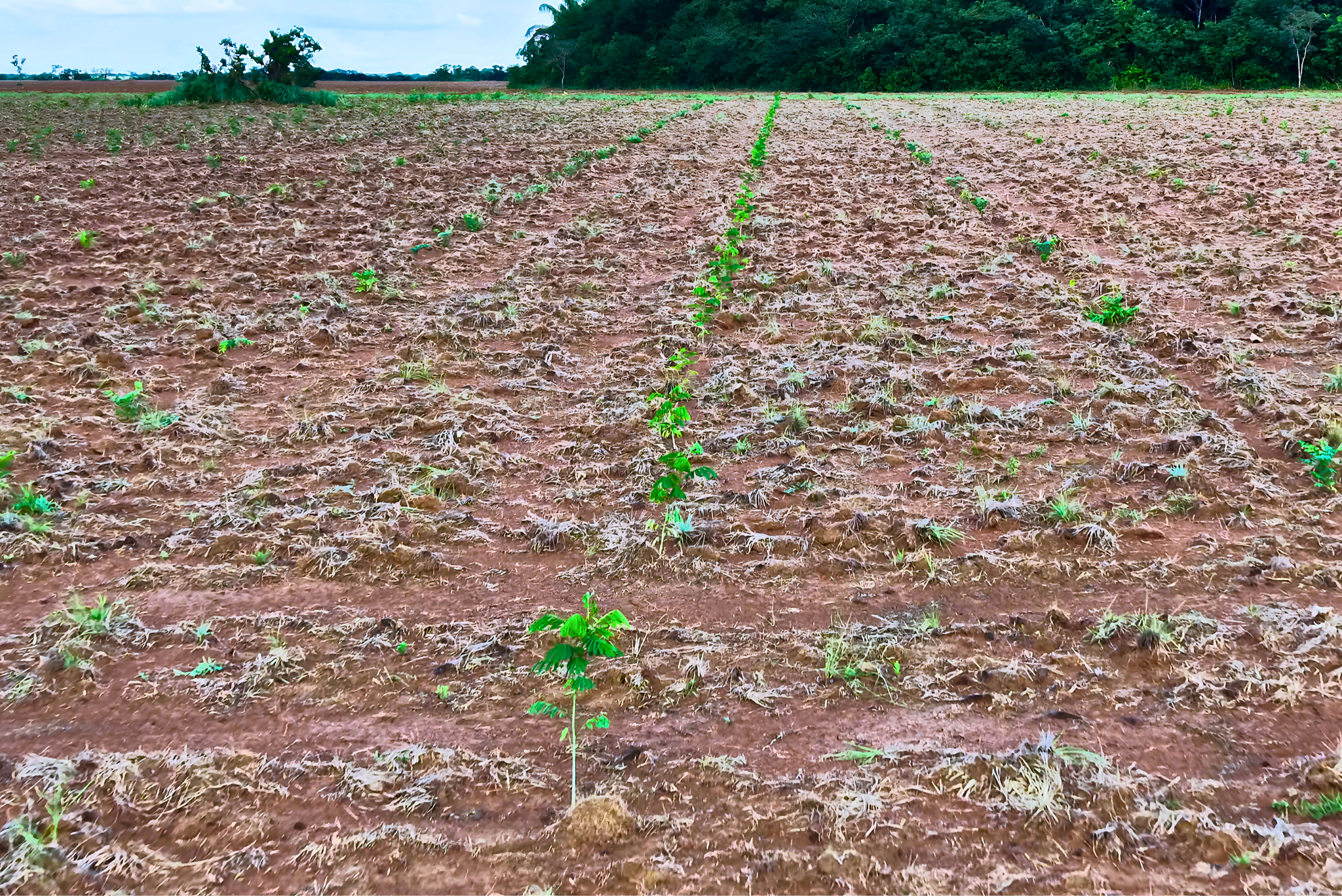
For restoration projects within our carbon offsetting business field, we have developed a special planting concept that incorporates the innovative component of “Nature Protects Nature” in addition to our proven approach with native tree species in a mixed forest system. The main focus of this planting concept is carbon sequestration.
Nature-based restoration

We employ a nature-based approach to restoration, predominantly using native tree species that have varying growth rates and are adapted to the specific site condition.
The result is a natural and resilient forest that is able to withstand environmental impacts from both biotic and abiotic factors. The planting concept imitates the natural succession of a forest and creates new habitat for plant and animal species.

Nature-based restoration
We employ a nature-based approach to restoration, predominantly using native tree species that have varying growth rates and are adapted to the specific site condition.
The result is a natural and resilient forest that is able to withstand environmental impacts from both biotic and abiotic factors. The planting concept imitates the natural succession of a forest and creates new habitat for plant and animal species.
OVERVIEW OF OUR CARBON FOREST SITES
Costa Rica

Los Chiles
| Farm | Area (ha) |
| Caño Negro | 414 ha |
| Llano Allegre | 315 ha |
Guatuso
| Farm | Area (ha) |
| El Pato 1-3 | 479 ha |
| Quebradon | 55 ha |
| Santa Lucia | 125 ha |
Cutris
| Farm | Area (ha) |
| Chamorro | 256 ha |
OVERVIEW OF OUR CARBON FOREST SITES
Costa Rica
Los Chiles
| Farm | Area (ha) |
| Caño Negro | 414 ha |
| Llano Allegre | 315 ha |
Guatuso
| Farm | Area (ha) |
| El Pato 1-3 | 479 ha |
| Quebradon | 55 ha |
| Santa Lucia | 125 ha |
Cutris
| Farm | Area (ha) |
| Chamorro | 256 ha |
Los Chiles
Los Chiles is our northernmost site and is located on the border with Nicaragua. The southern part of this restoration area borders directly on the well-known protected area “Refugio de Vida Silvestre Caño Negro”. Through our restoration work, we are expanding existing biodiversity corridors and creating new habitats for flora and fauna. Before we acquired the approximately 729 hectares of land in 2022, this area was predominantly used for livestock farming – and its condition was degraded accordingly.
FACTS
Location: Region “Alujuela”; canton “Los Chiles”
Size: 729 ha
Subdivision: Caño Negro & Llano Alegre
Restoration(s): Start in 2022
Tree species: A site-specific selection of 24 predominantly indigenous tree species with high carbon sequestration potential and different growth rates, e.g. Almendro and Botarrama.
Guatuso
Guatuso, with its total area of 660 hectares borders the “Volcán Tenorio” National Park. This region is mainly characterized by its topographical features with its hilly landscape. This topography is very similar to that of our farm in La Virgen. The restoration of forest is particularly important in these regions to prevent soil erosion. Before we acquired this land in 2022, it was used for cattle ranching.
FACTS
Location: Region “Alujuela”; canton “Guatuso” and “San Carlos”
Size: 660 ha
Subdivision: El Pato 1,2,3, Quebradon 1,2, Santa Lucia
Restoration(s): Start in 2022
Tree species: A site-specific selection of 24 predominantly indigenous tree species with high carbon sequestration potential and different growth rates, e.g. Almendro and Botarrama.
Cutris
The Cutris site is located just a few kilometers east of our restoration project in El Concho and is in close proximity to the Nicaraguan border. The region is characterized by an exceptionally high level of biodiversity. To protect this, the Refugio de Vida Silvestre Maquenque and the binational biological corridor El Castillo – San Juan – La Selva were established. Key species of these lowland rainforests include the Almendro tree and the rare great green macaw or soldier macaw.
Our restoration project in Cutris is situated near the protected area and is an integral part of the biological corridor. It thus makes a significant contribution to the preservation of this valuable habitat. On the approx. 265-hectare finca, we plant numerous Almendro trees among other native tree species. The fruits of these trees serve as a vital food source for the macaws and many other animal species, such as agoutis. The tree cavities in mature Almendro trees will in the future provide sought-after nesting sites for the endangered parrots, which almost exclusively nest in Almendro trees.
Facts
Location: Alajuela Province, San Carlos Canton
Size: 265 ha
Farms: Chamorro
Restoration(s): Beginn 2024
Tree species: Selection of seven native site-typical tree species with high CO2 sequestration potential, e.g., Gallinazo, Cebo, Pilon, Laurel, and Almendro
Los Chiles
Los Chiles is our northernmost site and is located on the border with Nicaragua. The southern part of this restoration area borders directly on the well-known protected area “Refugio de Vida Silvestre Caño Negro”. Through our restoration work, we are expanding existing biodiversity corridors and creating new habitats for flora and fauna. Before we acquired the approximately 729 hectares of land in 2022, this area was predominantly used for livestock farming – and its condition was degraded accordingly.
FACTS
Location: Region “Alujuela”; canton “Los Chiles”
Size: 729 ha
Subdivision: Caño Negro & Llano Alegre
Restoration(s): Start in 2022
Tree species: A site-specific selection of 24 predominantly indigenous tree species with high carbon sequestration potential and different growth rates, e.g. Almendro and Botarrama.

Guatuso
Guatuso, with its total area of 660 hectares borders the “Volcán Tenorio” National Park. This region is mainly characterized by its topographical features with its hilly landscape. This topography is very similar to that of our farm in La Virgen. The restoration of forest is particularly important in these regions to prevent soil erosion. Before we acquired this land in 2022, it was used for cattle ranching.
FACTS
Location: Region “Alujuela”; canton “Guatuso” and “San Carlos”
Size: 660 ha
Subdivision: El Pato 1,2,3, Quebradon 1,2, Santa Lucia
Restoration(s): Start in 2022
Tree species: A site-specific selection of 24 predominantly indigenous tree species with high carbon sequestration potential and different growth rates, e.g. Almendro and Botarrama.

Cutris
The Cutris site is located just a few kilometers east of our restoration project in El Concho and is in close proximity to the Nicaraguan border. The region is characterized by an exceptionally high level of biodiversity. To protect this, the Refugio de Vida Silvestre Maquenque and the binational biological corridor El Castillo – San Juan – La Selva were established. Key species of these lowland rainforests include the Almendro tree and the rare great green macaw or soldier macaw.
Our restoration project in Cutris is situated near the protected area and is an integral part of the biological corridor. It thus makes a significant contribution to the preservation of this valuable habitat. On the approx. 265-hectare finca, we plant numerous Almendro trees among other native tree species. The fruits of these trees serve as a vital food source for the macaws and many other animal species, such as agoutis. The tree cavities in mature Almendro trees will in the future provide sought-after nesting sites for the endangered parrots, which almost exclusively nest in Almendro trees.
Facts
Location: Alajuela Province, San Carlos Canton
Size: 265 ha
Farms: Chamorro
Restoration(s): Beginn 2024
Tree species: Selection of seven native site-typical tree species with high CO2 sequestration potential, e.g., Gallinazo, Cebo, Pilon, Laurel, and Almendro

Colombia
Flor Morado
| Farm | Area (ha) |
| El Veraneo | 1,555 ha |
| Punta Hermosa & Moriche Solo | 3,196 ha |
Flor Saphira
| Farm | Area (ha) |
| La Ilusión & La Catorce | 3,965 ha |
Yopo
| Farm | Area (ha) |
| Eucaliptos | 1.000 ha |
Colombia
Flor Morado
| Farm | Area (ha) |
| El Veraneo | 1,555 ha |
| Punta Hermosa & Moriche Solo | 3,196 ha |
Flor Saphira
| Farm | Area (ha) |
| La Ilusión & La Catorce | 3,965 ha |
Yopo
| Farm | Area (ha) |
| Eucaliptos | 1.000 ha |
El Veraneo
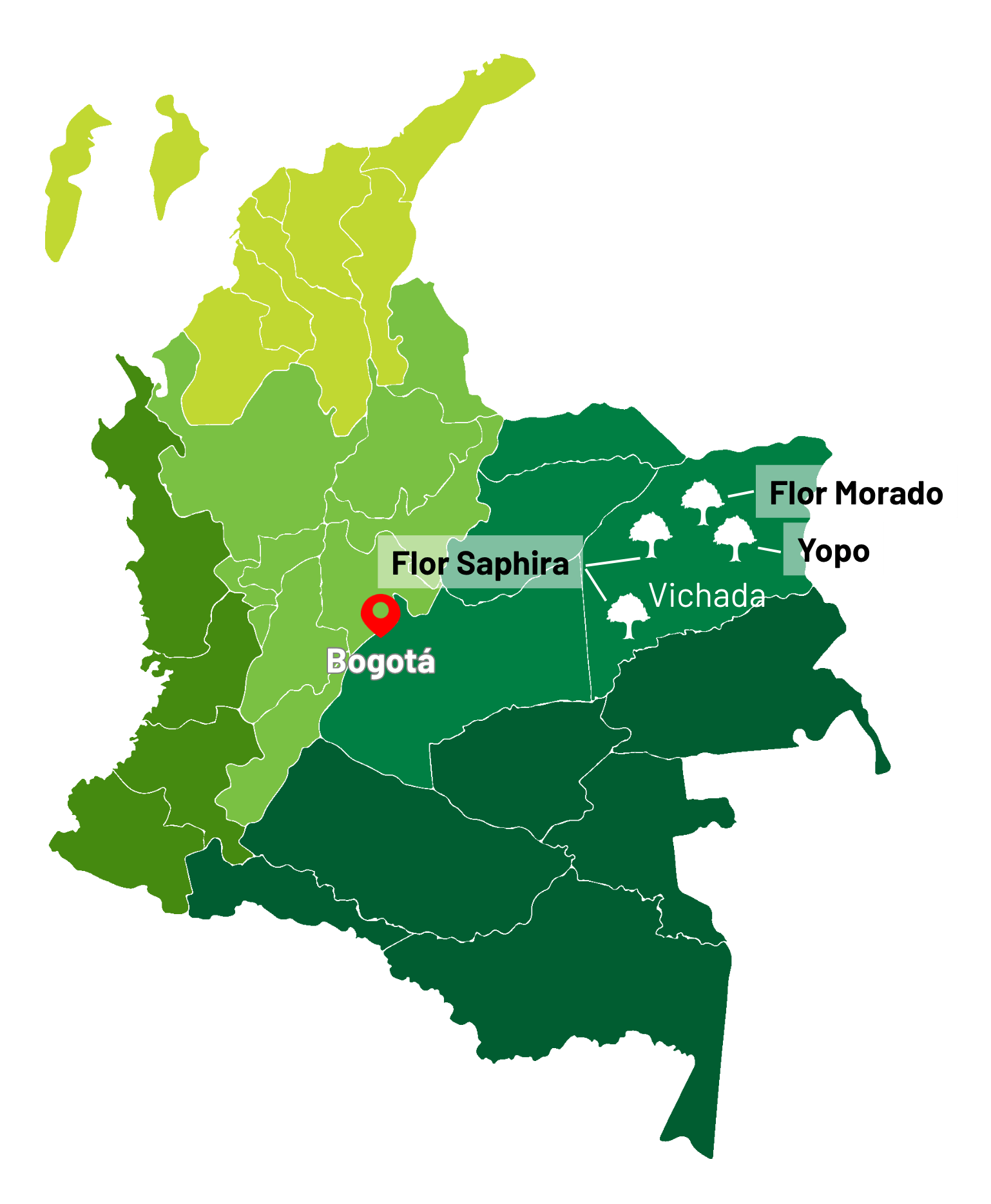
El Veraneo is our first restoration site located outside the Costa Rican borders. It is situated in the Colombian state of Vichada, in the Orinoco River plain. The hot and humid lowland at our new location provides ideal ecological conditions for implementing our restoration concept with tropical native tree species. It also forms an important biodiversity corridor, connecting to the Amazon rainforest. We aim to restore this extensively grazed land by implementing our nature-based planting concept, restoring the area and expanding the habitat for the flora and fauna of the Tuparro National Park, the largest and most significant park in the state of Vichada.
Facts
Location: Flor Morado, Vichada Department, Colombia
Total area: 1,555 net hectares
Subdivided fincas: El Veraneo
Restoration(s): 2023-2024
Tree species: A site-specific selection of 8 native tree species with high CO2 sequestration potential and varying growth rates
Punta Hermosa and Moriche Solo
Punta Hermosa and Moriche Solo are part of our Flor Morado project area in Colombia. On formerly degraded pastureland, a site-adapted tropical mixed forest of native tree species is being established to sequester CO₂ over the long term, improve soil functions, and create new habitat structures for local flora and fauna. In 2025, the restoration of the entire 2,546-hectare area was successfully completed.
Facts
Location: Flor Morado, Vichada Department, Colombia
Total area: 3,196 net hectares
Subdivided fincas: Punta Hermosa and Moriche Solo
Restoration(s): 2024-2025
Tree species: A site-specific selection of 11 native tree species with high CO₂ sequestration potential and varying growth rates
La Ilusión and La Catorce
La Ilusión and La Catorce together form our new Flor Saphira project area in Colombia, located around 80 kilometres west of Flor Morado. The formerly degraded pastureland provides ideal conditions for the development of a close-to-nature, structurally diverse forest ecosystem. Covering a total of 3,965 net hectares, the project will establish a tropical mixed forest that combines climate protection, biodiversity conservation, and local economic value creation.
Facts
Location: Flor Saphira, Vichada Department, Colombia
Total area: 3,965 net hectares
Subdivided fincas: La Ilusión and La Catorce
Restoration(s): Started in 2025
Tree species: A site-specific selection of 13 native tree species with high CO₂ sequestration potential and varying growth rates
Yopo
The Yopo project is located in the Colombian Department of Vichada, approximately 5 km south of our Flor Morado project area, nestled between two Indigenous reserves. On land that was previously used as pasture and had become degraded, a close-to-nature tropical mixed forest of native tree species is now taking shape. This forest will sequester CO₂ over the long term, contribute to soil regeneration, and strengthen ecological connectivity throughout the project region.
Facts
Location: Yopo, Vichada Department, Colombia
Total area: 1,000 net hectares
Subdivided fincas: Eucaliptos
Restoration(s): Started in 2026
Tree species: A site-specific selection of 7 native tree species with high CO₂ sequestration potential and varying growth rates, including the native species Jacaranda and Saman.
El Veraneo
El Veraneo is our first restoration site located outside the Costa Rican borders. It is situated in the Colombian state of Vichada, in the Orinoco River plain. The hot and humid lowland at our new location provides ideal ecological conditions for implementing our restoration concept with tropical native tree species. It also forms an important biodiversity corridor, connecting to the Amazon rainforest. We aim to restore this extensively grazed land by implementing our nature-based planting concept, restoring the area and expanding the habitat for the flora and fauna of the Tuparro National Park, the largest and most significant park in the state of Vichada.
Facts
Location: El Veraneo, Vichada region
Total area: 1,555 ha
Individual farms: One unit
Restoration(s): 2023-2024
Tree species: a site-specific selection of 6 native tree species with high carbon sequestration potential and varying growth rates.
Punta Hermosa and Moriche Solo
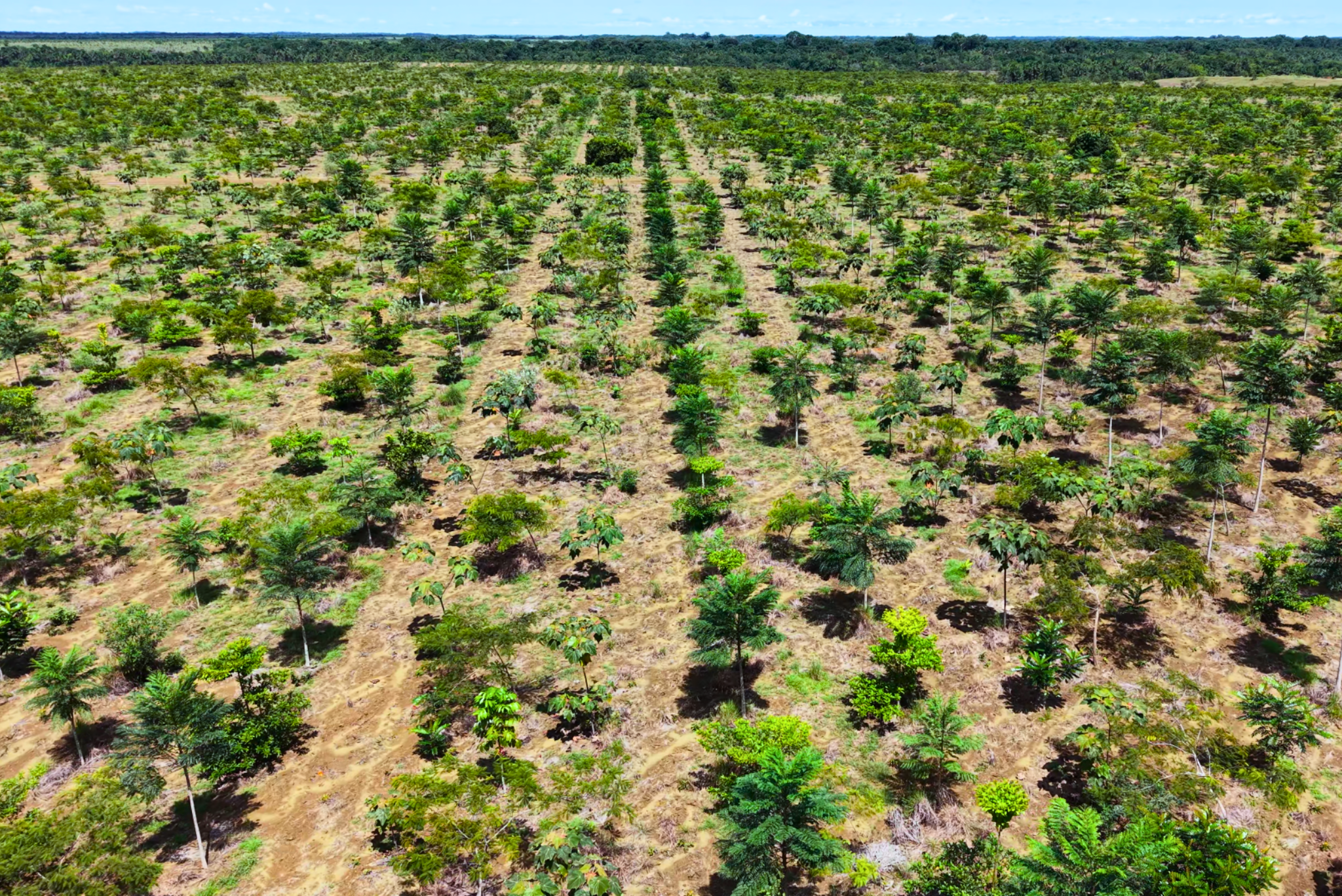
Punta Hermosa and Moriche Solo are part of our Flor Morado project area in Colombia. On formerly degraded pastureland, a site-adapted tropical mixed forest of native tree species is being established to sequester CO₂ over the long term, improve soil functions, and create new habitat structures for local flora and fauna. In 2025, the restoration of the entire 2,546-hectare area was successfully completed.
Facts
Location: Flor Morado, Vichada Department, Colombia
Total area: 3,196 net hectares
Subdivided fincas: Punta Hermosa and Moriche Solo
Restoration(s): 2024-2025
Tree species: A site-specific selection of 11 native tree species with high CO₂ sequestration potential and varying growth rates
La Ilusión and La Catorce
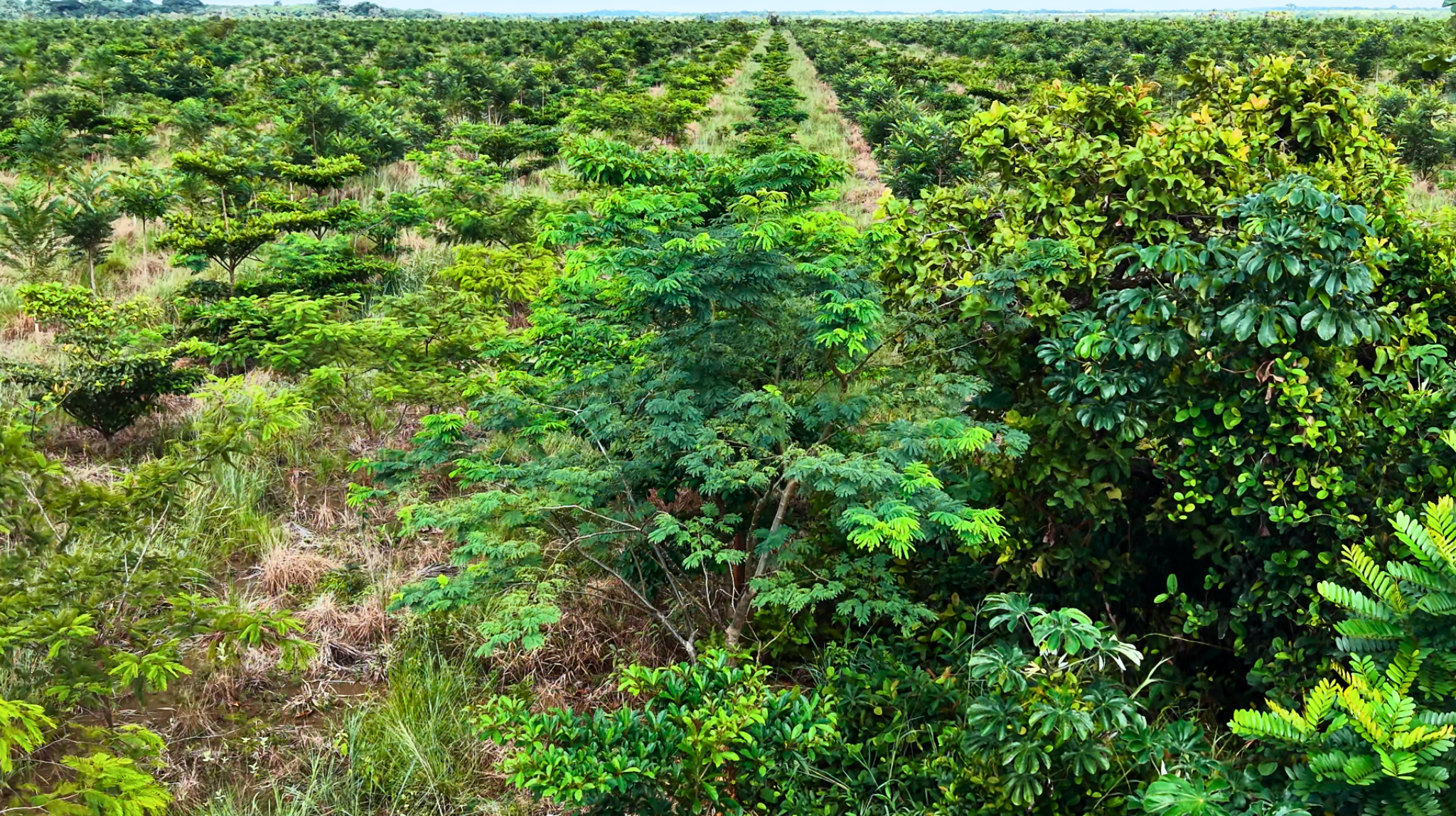
La Ilusión and La Catorce together form our new Flor Saphira project area in Colombia, located around 80 kilometres west of Flor Morado. The formerly degraded pastureland provides ideal conditions for the development of a close-to-nature, structurally diverse forest ecosystem. Covering a total of 3,965 net hectares, the project will establish a tropical mixed forest that combines climate protection, biodiversity conservation, and local economic value creation.
Facts
Location: Flor Saphira, Vichada Department, Colombia
Total area: 3,965 net hectares
Subdivided fincas: La Ilusión and La Catorce
Restoration(s): Started in 2025
Tree species: A site-specific selection of 13 native tree species with high CO₂ sequestration potential and varying growth rates
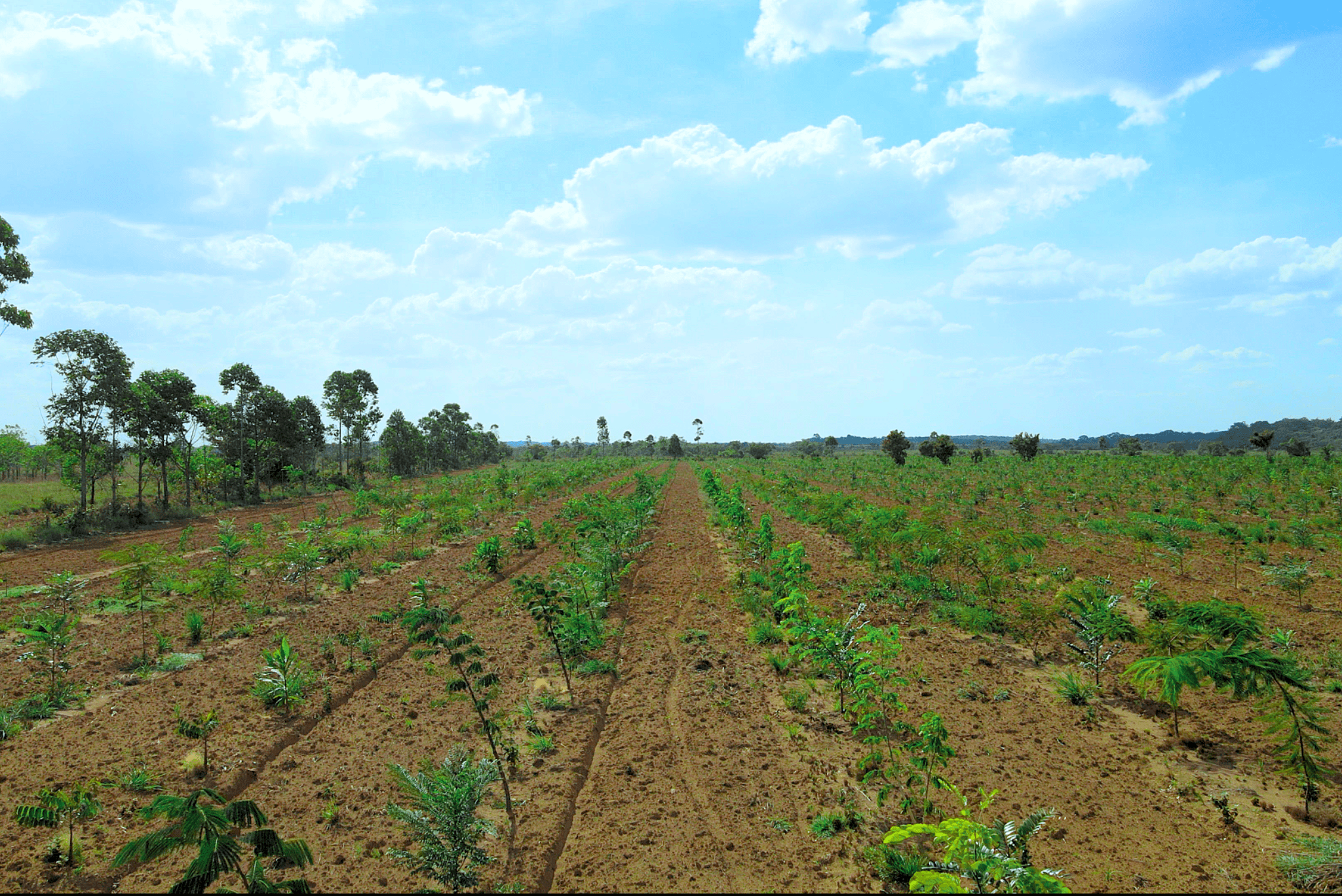
Yopo
The Yopo project is located in the Colombian Department of Vichada, approximately 5 km south of our Flor Morado project area, nestled between two Indigenous reserves. On land that was previously used as pasture and had become degraded, a close-to-nature tropical mixed forest of native tree species is now taking shape. This forest will sequester CO₂ over the long term, contribute to soil regeneration, and strengthen ecological connectivity throughout the project region.
Facts
Location: Yopo, Vichada Department, Colombia
Total area: 1,000 net hectares
Subdivided fincas: Eucaliptos
Restoration(s): Started in 2026
Tree species: A site-specific selection of 7 native tree species with high CO₂ sequestration potential and varying growth rates, including the native species Jacaranda and Saman.